Best Tools for Plantar Fasciitis (2026): 9 Devices That Actually Help
 B MishraUpdated November 21, 20269 tools compared, from $10 to $200
We earn a commission if you buy through links on this page, at no extra cost to you. As an Amazon Associate we earn from qualifying purchases. It never decides which product we recommend. How we make money
What is the best device for plantar fasciitis?
For most people, the best device is not one gadget but a cheap combination: a firm foot roller (wooden or spiky) for the arch, a frozen massage ball for flare-ups, and a night splint if your first steps in the morning are the worst part of your day. Add arch-support insoles so the fascia is not strained all day. If you want something that does the work for you, an electric shiatsu foot massager with heat is the most comfortable option, but it costs more and works best alongside stretching, not instead of it.
Best overall (cheapest that works)
Wooden foot roller
Firm arch massage you can do under a desk.
Best for morning heel pain
Night splint or Strassburg sock
Keeps the fascia gently stretched overnight.
Best electric option
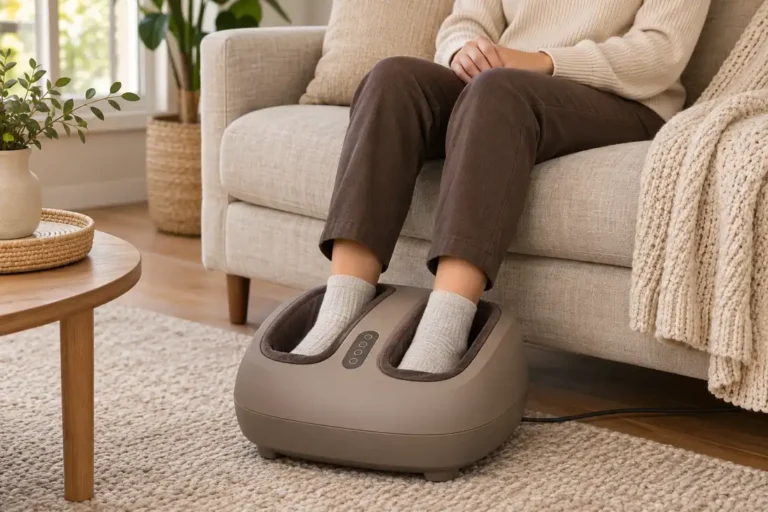
Miko Shiatsu Foot Massager with Heat
Kneading, compression and heat with no effort.
Key takeaways
- Plantar fasciitis is a load problem. Tools help most when they are combined with calf and fascia stretching and better support.
- The first 10 steps of the day matter most. Stretch and roll before you stand, and consider a night splint.
- Cheap manual tools work. A $10–25 roller or ball is what physiotherapists usually suggest first.
- Cold for flare-ups, heat for stiffness. A frozen ball calms a sore heel; heat loosens tight tissue before stretching.
- Electric massagers are a comfort upgrade, not a cure. Choose one that reaches the arch and heel, with adjustable pressure.
- See a doctor if pain lasts more than a few weeks, if there is swelling, numbness or bruising, or if you have diabetes.
Plantar fasciitis is the most common cause of heel pain in adults. The plantar fascia is a thick band of tissue that runs from your heel bone to your toes and supports the arch. When it is overloaded, from long hours standing, running, weight gain, tight calves or worn-out shoes, it becomes irritated where it attaches to the heel. The classic sign is a stabbing pain in the heel with your first steps in the morning or after sitting, which eases as you walk and then returns later in the day.
The good news is that most cases improve with simple home treatment over a few months. The bad news is that the internet sells hundreds of “plantar fasciitis machines”. This guide sorts the tools that are worth your money from the ones that are not, in the order we would actually buy them.
Plantar fasciitis tools compared
| Tool | Typical price | What it does | Best time to use | |
|---|---|---|---|---|
| Wooden foot roller | $10–25 | Firm rolling of the arch | Morning and evening | Price |
| Frozen massage ball | $10–20 | Cold plus pressure on the heel | After activity, during flare-ups | Price |
| Spiky or lacrosse ball | $8–15 | Targeted pressure on knots | Any time, at a desk | Price |
| Night splint / Strassburg sock | $20–40 | Holds a gentle stretch overnight | While sleeping | Price |
| Arch-support insoles | $30–55 | Reduces strain on the fascia all day | In shoes all day | Price |
| Silicone heel cups | $10–20 | Cushions the sore heel | Standing jobs, hard floors | Price |
| Slant board / foot rocker | $20–40 | Calf and fascia stretching | Before and after walking | Price |
| Electric shiatsu foot massager | $100–250 | Kneading, compression, heat | Evening, before stretching | Price |
| Massage gun with ball head | $60–300 | Calf and arch percussion | Calves after exercise | Price |
The best tools for plantar fasciitis in 2026
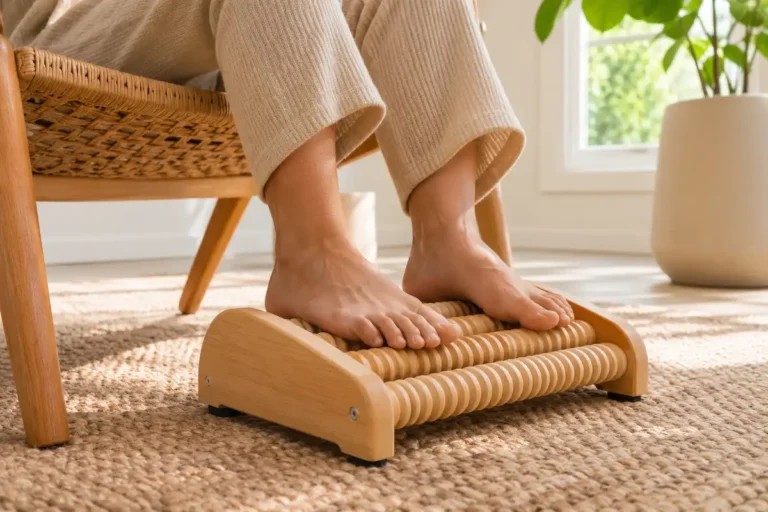
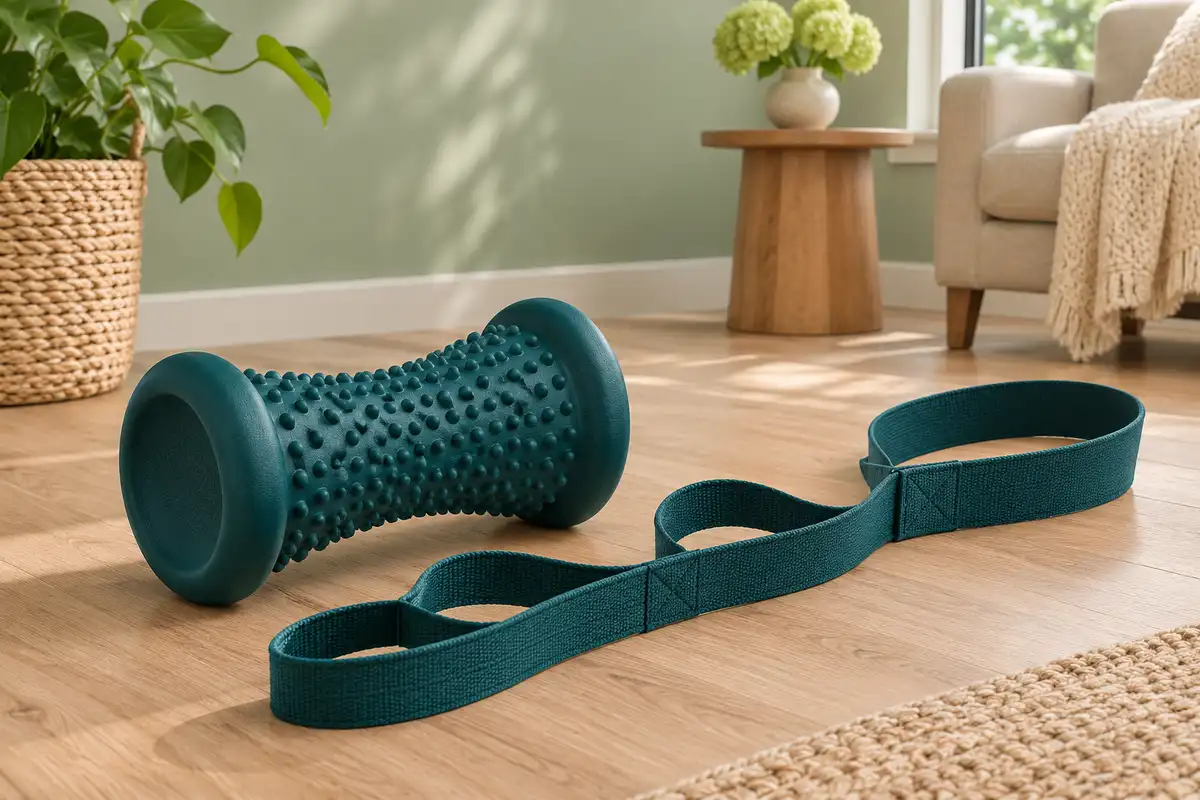
A wooden foot roller is a row of ridged wooden spindles in a frame. You put your foot on top and roll it back and forth, pressing as hard as feels useful. It is the simplest way to massage the whole length of the arch, and because you control the pressure, you can go gently on a bad day and firmer when the tissue is just tight.
Use it for one or two minutes before you get out of bed (keep it by the bed), and again in the evening. Many people also keep one under the desk. Dual rollers that take both feet, or models with different ridge sizes, are worth the extra few dollars.
The limit is that it does very little for the heel itself, and it does not warm or stretch the tissue. That is why it works best alongside a stretch and, on bad days, a cold ball.
Best for Anyone with arch tightness who wants a cheap first tool.
Skip it if Your pain is mainly right on the heel bone; a ball or heel cup will help more.
A frozen massage ball combines ice and rolling. You keep it in the freezer and roll it under the heel and arch after a long day or a run. The cold numbs the sore area and can take the edge off a flare-up, while the rolling still loosens the tissue.
A frozen water bottle does the same job for free if you want to test the idea first. Use a thin sock if the cold is too intense, and stop at around 10 minutes.
Best for Evening flare-ups and sore heels after standing or running.
Skip it if You have poor circulation or reduced feeling in your feet: check with your doctor before using cold.
A small, firm ball lets you dig into specific tender spots in the arch and around the heel that a roller passes over. A lacrosse ball is firm; a spiky ball is softer but adds texture. Sit down, place the ball under your foot and lean in until you feel firm, tolerable pressure. Hold on tender spots for 20–30 seconds.
A ball is also the best tool for the calves. Tight calf muscles pull on the heel through the Achilles tendon and increase strain on the fascia, so rolling the calves often helps more than people expect.
Best for Targeting knots, and travel.
Skip it if Sitting down to roll is uncomfortable for you; a roller under a desk is easier.
When you sleep, your foot points down and the fascia shortens. The first steps in the morning stretch it suddenly, which is why that pain is so sharp. A night splint holds your ankle at a gentle angle so the fascia and calf stay lengthened overnight.
There are two styles. A dorsal splint is a hard brace along the top of the foot and is usually more comfortable than the bulky boot style. A Strassburg sock is a tall sock with a strap that pulls the toes up; it is light but some people find it too warm. Clinical guidelines support night splints for people whose worst pain is in the morning, though many people need a few nights to get used to sleeping in one.
Best for Sharp first-step pain in the morning.
Skip it if You move a lot in your sleep or cannot tolerate anything on your foot overnight.
Massage relieves the symptoms; support reduces the strain that caused them. A semi-rigid arch insole with a deep heel cup takes load off the fascia every time you take a step. Over-the-counter insoles work well for many people, and custom orthotics are rarely needed as a first step.
Put them in the shoes you wear most, including your work shoes. Avoid walking barefoot on hard floors while the heel is sore, and replace running shoes that have lost their cushioning.
Best for Anyone who stands or walks a lot.
Skip it if Your shoes have no removable insole; look at supportive shoes instead.
Heel cups cushion the exact spot where the fascia attaches to the bone. They are cheap and help most for people who stand all day on concrete or tile. They do not support the arch, so pair them with good shoes, or choose an insole with a built-in heel cup instead.
Best for Standing jobs on hard floors.
Skip it if You already wear a full arch-support insole.
Stretching the calf and fascia is one of the best-supported home treatments for plantar fasciitis. A slant board makes it easy: you stand on it with your heels down and hold the stretch for 30 seconds or more. A foot rocker is a smaller version you can use while seated. Neither is essential, as a step or a wall works too, but having a tool in sight makes people actually do the stretches.
Best for People who forget or skip their stretches.
Skip it if You have poor balance; do wall stretches while holding on instead.
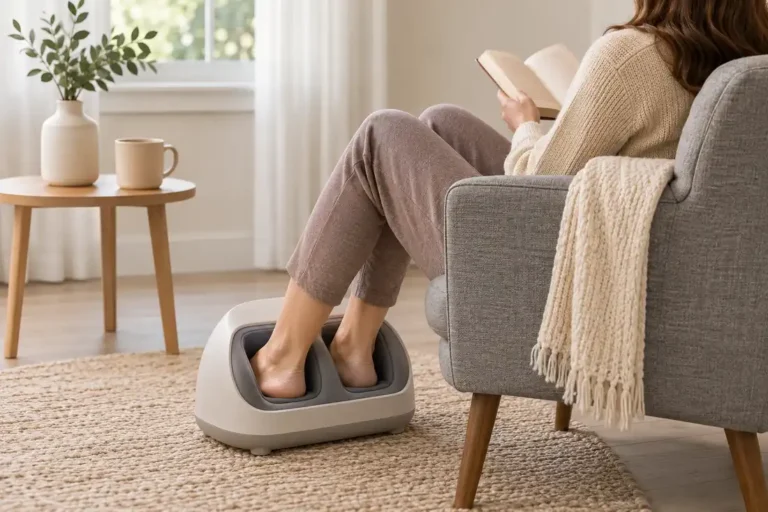
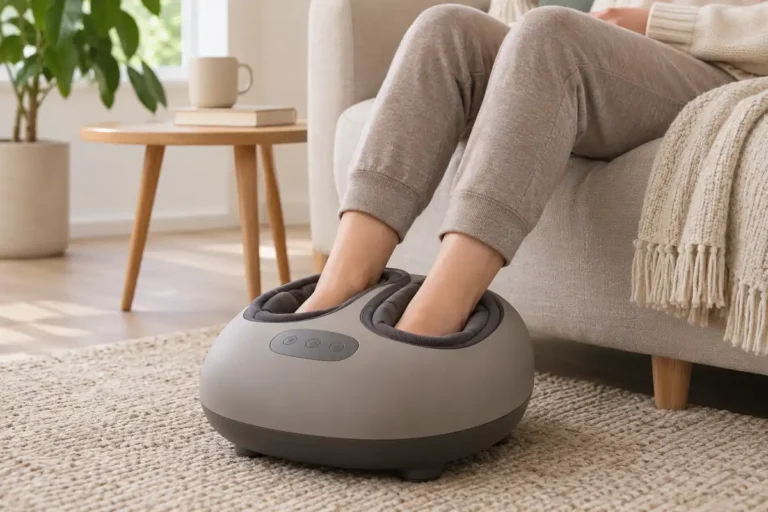
An enclosed shiatsu foot massager wraps both feet and uses rotating rollers on the sole, air bags that squeeze the sides of the foot, and gentle heat. For plantar fasciitis it is the most comfortable way to warm up and loosen the arch before stretching, and many people use one in the evening.
Miko’s model has heat and adjustable intensity, which matters: on a sore heel, too much pressure can hurt for a day afterwards. Start on the lowest setting. Check the maximum shoe size before you buy if you have large feet. You can read more options in our best heel massagers for plantar fasciitis guide.
Best for People who want relief without effort, especially after long shifts.
Skip it if You only want to spend $20; a roller and ball give most of the benefit.
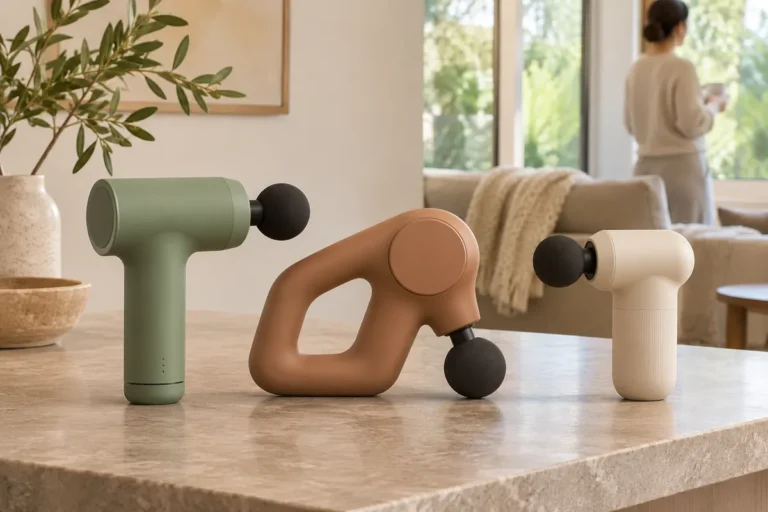
A massage gun is most useful on the calves, which are usually tight in people with plantar fasciitis. On the arch, use a soft ball head and the lowest speed, and keep it off the heel bone itself. If you already own one, it is worth using; we would not buy one only for plantar fasciitis. See our best massage guns guide for picks.
Best for Runners and gym users with tight calves.
Skip it if You only need it for the foot; a roller is cheaper and safer.
A simple daily routine that combines the tools
Tools work best as a routine. This is a common approach that physiotherapists suggest and that people with plantar fasciitis report works for them. Stop anything that makes the pain clearly worse.
- Before you get out of bed: pull your toes back towards your shin with your hand or a towel for 30 seconds, three times. Roll the arch on the wooden roller for a minute.
- First steps: put on supportive shoes or slippers straight away. Avoid walking barefoot on hard floors.
- During the day: wear arch-support insoles. If you sit at a desk, keep a roller or ball under it.
- After work or exercise: warm the foot (heat or an electric massager for 10–15 minutes), then do calf stretches on a step or slant board, 3 × 30 seconds per leg.
- If the heel is throbbing: roll on a frozen ball for 5–10 minutes instead of using heat.
- Bedtime: wear a night splint if mornings are your worst time.
Most people notice the morning pain easing within a few weeks of doing this consistently. Full recovery usually takes several months.
Heat or cold for plantar fasciitis?
Both have a place. Cold is best after activity or when the heel is throbbing and sore, because it numbs pain. Heat is best before stretching or massage, because warm tissue is more flexible. A simple rule: heat before you move, cold after a hard day. Do not use heat on a freshly injured, swollen or bruised foot, and never fall asleep on a heating pad.
What doesn’t work as well as it’s sold
- “Plantar fasciitis machines” with big claims. No massager cures plantar fasciitis. Be cautious with products that promise a fix in days.
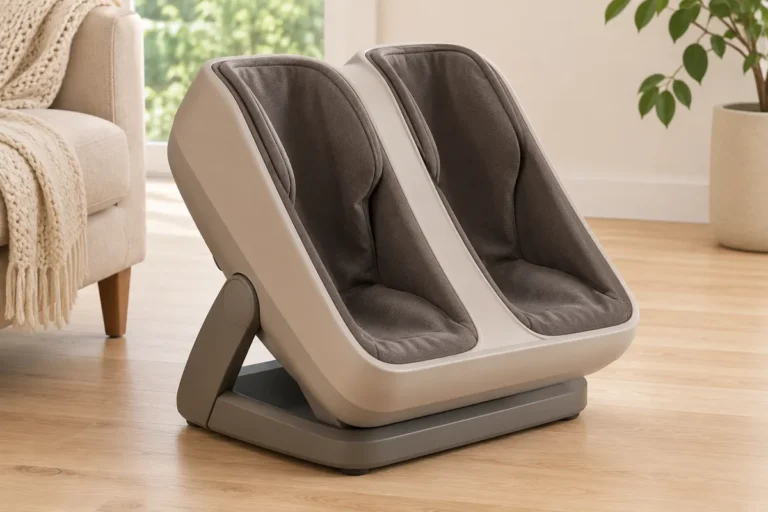
- Vibrating foot plates. They feel pleasant but do little for the arch.
- Very soft memory-foam insoles. Comfortable at first, but they give little arch support.
- Toe-separator socks alone. Fine for comfort, not a treatment.
How to choose the right tool for you
- Morning pain is worst: night splint plus a stretch and roll before you stand.
- Pain builds through the day: insoles, heel cups and supportive shoes.
- Arch feels tight and knotted: wooden roller or ball.
- Heel throbs after activity: frozen ball.
- You stand all day and want relief at night: electric shiatsu foot massager with heat.
- You are a runner: massage gun or ball on the calves, and look at your training load and shoes.
When to see a doctor
See a doctor or podiatrist if heel pain lasts more than a few weeks despite home care, if you cannot put weight on the foot, if the heel is swollen, red or bruised, or if you have numbness or tingling. People with diabetes or poor circulation should check with a doctor before using heat, cold or strong massage on the feet, because reduced feeling makes burns and bruises easy to miss. Heel pain can also come from a stress fracture, nerve compression or arthritis, which need different treatment.
Frequently asked questions
What is the fastest way to get rid of plantar fasciitis?
There is no instant fix. The fastest results usually come from doing several things together: daily calf and fascia stretches, rolling the arch, supportive shoes or insoles, reducing activities that flare it, and a night splint if mornings are worst. Most people improve over weeks to months.
Is a wooden foot roller good for plantar fasciitis?
Yes. It is a cheap, effective way to massage the arch and loosen tight tissue. It works best as part of a routine with stretching, and it does less for pain right on the heel bone.
Do electric foot massagers help plantar fasciitis?
They can ease pain and stiffness, especially models with heat and kneading that reach the arch and heel. They are a comfort tool rather than a cure, and should be used on gentle settings.
Should I roll my foot on a frozen bottle?
It is a good free option for flare-ups. Roll for 5–10 minutes after activity. Use a thin sock if it is too cold, and skip it if you have poor circulation or reduced feeling in your feet.
Do night splints really work?
For people whose worst pain is the first steps in the morning, night splints are supported by clinical guidelines. They take some getting used to.
Can a massage gun make plantar fasciitis worse?
It can if you use it hard on the heel bone. Use it mainly on the calves, and on the arch only with a soft head on a low speed.
How long does plantar fasciitis take to heal?
Many people improve within 3–6 months with consistent home treatment. Some cases take up to a year. See a doctor if there is no improvement after a few weeks.
Sources
This guide is based on published clinical guidance for heel pain and plantar fasciitis, including the American Physical Therapy Association’s Heel Pain–Plantar Fasciitis clinical practice guideline (revised 2023), NHS and Mayo Clinic patient guidance, and product information from manufacturers. It is educational information, not medical advice.