How to Use a Massage Gun: Step-by-Step Guide by Body Part (2026)
 B MishraUpdated November 15, 20268 body areas covered
We earn a commission if you buy through links on this page, at no extra cost to you. As an Amazon Associate we earn from qualifying purchases. It never decides which product we recommend. How we make money
How do you use a massage gun?
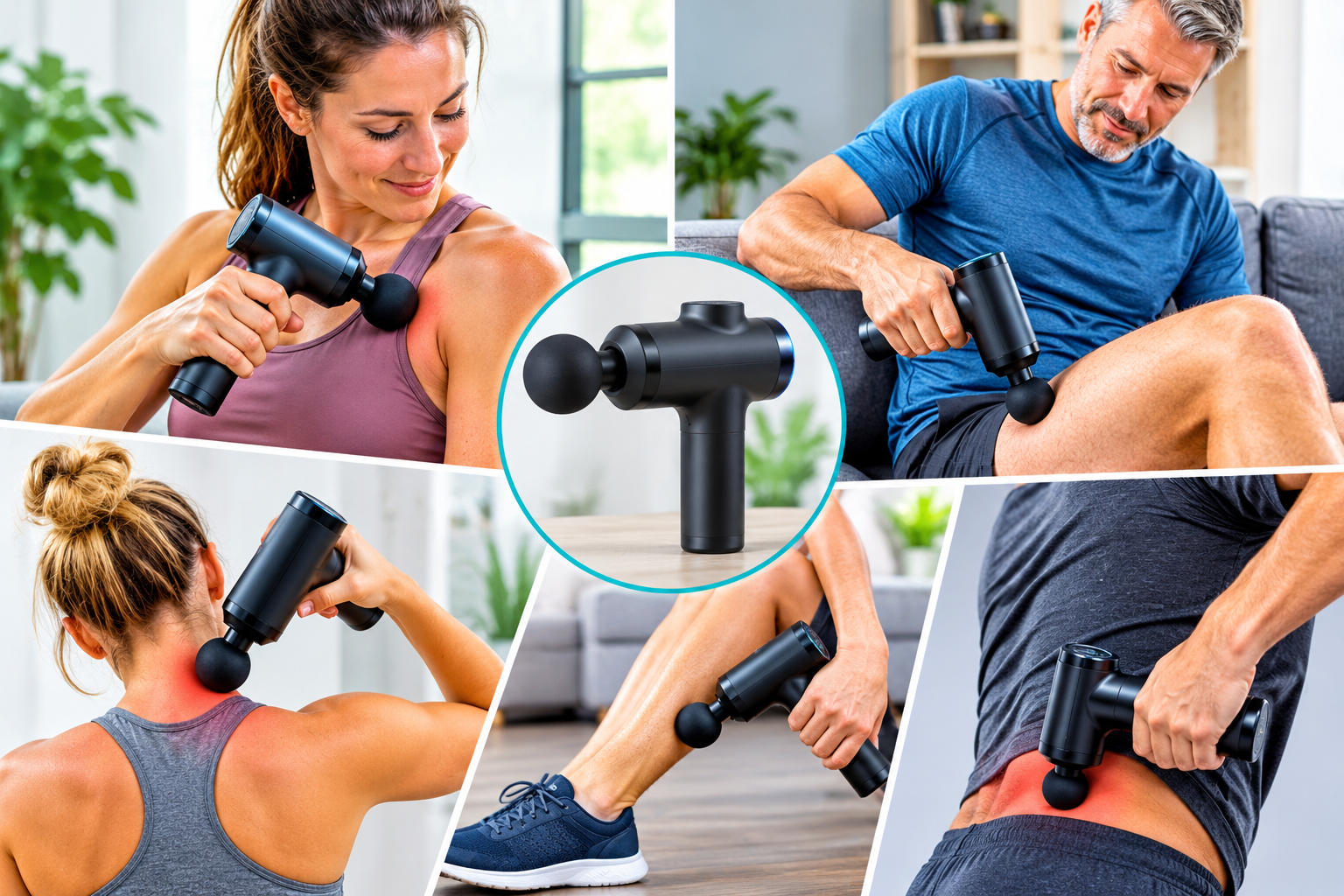
Switch it on at the lowest speed, rest the round head on a large muscle and let the gun float over it for 15 to 30 seconds, moving slowly. Give each muscle group no more than about 2 minutes. Don’t press hard, and keep it off bones, joints, the front and sides of the neck, the head and any injury. In a 2020 study, 5 minutes on the calves increased ankle range of motion without reducing strength.
Best value
Opove M3 Pro 2
5 speeds, 6 heads, quiet brushless motor.
Best premium
Theragun Prime (6th Gen)
Ergonomic handle reaches your back.
Best budget
TOLOCO massage gun
Around $40 with lots of heads.
Key takeaways
- Start on the lowest speed and float the gun over the muscle. Let its weight do the work.
- Spend 15 to 30 seconds on a spot and up to about 2 minutes per muscle group.
- Use it before exercise for a short warm-up, or after to relax tight muscles.
- Never use it on the front or sides of the neck, the head, the eyes, bones, joints, bruises or a suspected blood clot.
- Most research is small and short-term. Expect better comfort and flexibility, not faster healing.
Before you start: 4 quick checks
- Charge it fully and check the head is pushed all the way in.
- Pick the round ball head. It suits almost every muscle. Save the bullet head for small knots.
- Choose the lowest speed. You can always go up.
- Check your health. If you take blood thinners, have a clotting disorder, osteoporosis or diabetic nerve damage, are pregnant, or have a pacemaker or other implant, ask your doctor first.
How to use a massage gun: the basic technique
- Turn it on before it touches you. Starting the motor against the skin feels like a jolt.
- Hold the gun at 90 degrees to the muscle with the head flat on the skin.
- Float, don’t push. Use only enough pressure to keep contact. Pressing hard stalls the motor and can bruise.
- Glide slowly, about one inch per second, along the length of the muscle.
- Pause on tight spots for 5 to 10 seconds, then move on.
- Stop at 2 minutes per muscle group. A whole-body session should take 10 to 15 minutes.
| Goal | Speed | Time per muscle | Best head |
|---|---|---|---|
| Warm-up before exercise | Low to medium | 30 to 60 seconds | Round ball or flat |
| Cool-down after exercise | Low | 1 to 2 minutes | Round ball or cushion |
| Next-day soreness | Low | 1 to 2 minutes | Cushion or round ball |
| Small knot | Low | 10 to 15 seconds on the spot | Bullet |
| Relaxing at the end of the day | Low | 1 minute | Flat or round ball |
These are common starting points, not research-proven doses. Stop if anything hurts.
How to use a massage gun on each body part
Calves
Sit with your leg straight or slightly bent. Start below the back of the knee (avoid the crease itself) and glide down to above the ankle, covering the inner and outer calf. This is the best-studied area: a 5-minute calf treatment in Konrad and colleagues’ 2020 study improved ankle flexibility with no loss of strength.
Thighs (quads and hamstrings)
For the quads, sit and glide from just above the knee to the hip in three lines: inside, middle and outside. For hamstrings, sit on the edge of a chair or lie face down and work from below the buttock to above the knee. These are big muscles, so a medium speed is usually fine.
Glutes and hips
Stand and lean slightly forward, or lie on your side. Work in slow circles over the buttock and stay off the hip bone. If pain shoots down your leg, stop; you may be pressing on the sciatic nerve. For the front of the hip, see how to massage your hip flexors.
Lower back
Work only on the thick muscles either side of the spine, never on the spine itself. Use the lowest speed and keep it brief. A gun with an angled handle, like the Theragun Prime, makes this easier to reach. For ongoing back pain, see our guide to massage for lower back pain.
Upper back and shoulders
Glide over the top of the shoulder (the trapezius) and the shoulder-blade area. Keep away from the collarbone and the front of the shoulder joint. Asking someone else to do your upper back is safer and more effective.
Neck
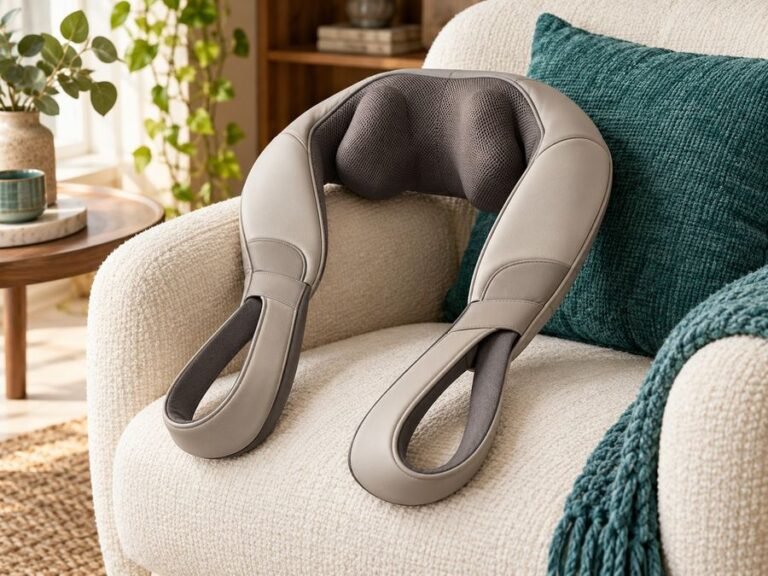
Only the muscles at the back of the neck, on the lowest speed with a soft head, for under 30 seconds. Never use a massage gun on the front or sides of the neck, where major arteries and nerves run close to the surface. A shiatsu pillow is often a better choice; see our neck massager guide.
Arms
Treat the biceps, triceps and forearm muscles on low speed. Avoid the inside of the elbow and the wrist, where nerves sit close to the skin.
Feet
Use the round or cushion head on the arch on low speed. Keep it off the bones on top of the foot. For heel pain, also see our heel massager guide.
Where you should never use a massage gun
- The head, face and eyes. Doctors have reported retinal damage in a man who used a massage gun around his eyes for three months.
- The front and sides of the neck.
- Bones, joints and the spine.
- Bruises, cuts, varicose veins, sunburn or inflamed skin.
- Any area that is red, warm, swollen and painful, especially one calf. That can be a deep vein thrombosis (DVT), and massage is not safe.
- A fresh injury, such as a sprain or strain in its first few days.
- Over a pacemaker or other implanted device.
Before or after a workout?
Both work. Before exercise, 30 to 60 seconds per working muscle can be part of a warm-up and may improve flexibility in the short term. After exercise, a gentle 1 to 2 minutes per muscle can make sore muscles feel better. Studies so far are small and mostly short-term: they show gains in range of motion and less stiffness, with little or no effect on strength, sprinting or jumping.
How often can you use a massage gun?
Most people can use one daily if they keep sessions short and pressure light. If a muscle is still tender to the touch the next day, you pressed too hard or stayed too long. Give it a rest.
Common mistakes
- Pressing too hard. More pressure does not mean more benefit.
- Staying on one spot for minutes. This can cause bruising.
- Starting on the highest speed.
- Using the bullet head everywhere. It is for small spots only. See our attachments guide.
- Using it instead of seeing a doctor for pain that is severe, getting worse or lasting weeks.
See a doctor if…
You have pain with swelling, warmth or redness in one leg, numbness or tingling that doesn’t go away, pain after a fall, or pain that is getting worse. Get urgent help for sudden chest pain or breathlessness.
How we wrote this guide
We reviewed the 2020 Konrad study and the 2024 Nakamura study on percussive massage, NHS guidance on DVT and manufacturer safety warnings. We haven’t physically tested the massage guns listed; in October 2026 we compared in-stock models by speed range, attachments, price and owner ratings. See how we test and our full massage gun rankings.
Frequently asked questions
How long should you use a massage gun on one muscle?
Should a massage gun hurt?
Can I use a massage gun every day?
Can I use a massage gun on my neck?
Is a massage gun good for sore muscles after exercise?
Which attachment should beginners use?
B Mishra writes RightMassager’s buying guides, comparing massager specs, prices and owner feedback against published research. More about our team
Sources
- Konrad A, et al. The acute effects of a percussive massage treatment with a Hypervolt device on plantar flexor muscles. J Sports Sci Med, 2020
- Nakamura M, et al. Percussive massage with and without heat on plantar flexor muscles. J Sports Sci Med, 2024
- Live Science: Improper use of a massage gun tore holes in a man’s retinas
- NHS: Deep vein thrombosis (DVT)
- Amazon: Opove M3 Pro 2
- Amazon: Theragun Prime
- Amazon: TOLOCO massage gun