Massage Gun Side Effects: Risks, Where Not to Use It and Who Should Avoid One
 B MishraUpdated November 15, 202610 risks and warning signs
We earn a commission if you buy through links on this page, at no extra cost to you. As an Amazon Associate we earn from qualifying purchases. It never decides which product we recommend. How we make money
Are massage guns safe?
For most healthy adults, yes, when used on low to medium speed for short periods on muscle. The most common side effects are soreness, redness and bruising. Rare but serious problems have been reported when guns are used on the eyes, neck or over a blood clot. People who take blood thinners or have osteoporosis, nerve damage, a pacemaker, a recent injury or pregnancy should check with a doctor first.
Key takeaways
- Bruising and next-day tenderness usually mean too much pressure or too long on one spot.
- Never use a massage gun on the eyes, head, front or sides of the neck, spine, bones or joints.
- Don’t use one on a calf that is swollen, red, warm and painful. That can be a deep vein thrombosis (DVT).
- Get medical advice first if you’re on blood thinners, pregnant, have osteoporosis, diabetes-related nerve damage or an implanted device.
- Keep sessions to about 2 minutes per muscle group.
Common side effects
| Side effect | Usual cause | What to do |
|---|---|---|
| Soreness the next day | Too much pressure or time | Rest the area 1 to 2 days; use lower speed next time |
| Bruising | Pressing hard, bullet head, thin skin, blood thinners | Stop using on that area until it fades |
| Redness or itching | Increased blood flow, friction | Usually fades within an hour |
| Tingling or numbness | Pressing on a nerve | Stop and move away from that spot |
| Headache | Use on the neck or near the head | Keep the gun off the neck and head |
Rare but serious risks
Eye injury
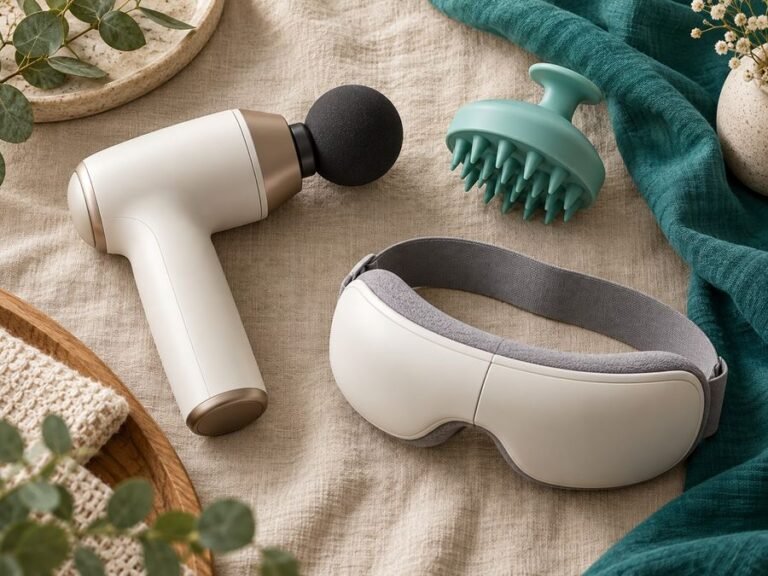
Doctors have described a man who developed holes in both retinas after using a massage gun on and around his eyes for three months. Never use a massage gun on your face or near your eyes. For eye-area relaxation, a gentle heated eye mask is a safer choice; see our eye massager guide.
Neck and blood vessel injury
The carotid and vertebral arteries run close to the surface in the front and sides of the neck. Case reports have linked forceful neck massage to artery tears (dissections) and stroke. These are rare, but the risk isn’t worth it. Only use the gun on the muscles at the back of the neck, on the lowest speed, briefly, or skip the neck entirely.
Blood clots
If you have a deep vein thrombosis, massaging the area could in theory dislodge the clot. The NHS lists throbbing pain, swelling, warmth and redness in one leg, usually the calf, as warning signs. Don’t massage it; get medical help the same day.
Muscle breakdown
There are rare reports of rhabdomyolysis, a serious condition where damaged muscle releases proteins into the blood, after aggressive vibration or massage. Very dark urine with severe muscle pain needs urgent care.
Nerve injury
Nerves sit close to the skin at the inside of the elbow, behind the knee, the wrist and the front of the hip. Pressing a fast-moving head into them can cause tingling or, rarely, longer-lasting nerve irritation.
Where never to use a massage gun
- Eyes, face and head
- Front and sides of the neck
- Spine, collarbone, hip bones, kneecaps, shins and other bony areas
- Inside of the elbow, back of the knee, groin and armpit
- Abdomen, especially in pregnancy
- Bruises, cuts, rashes, sunburn, varicose veins
- Recent sprains, strains, fractures or surgical scars
- Over a pacemaker, defibrillator, insulin pump or other implant
Who should check with a doctor first
- People on blood thinners or with a bleeding disorder: higher risk of bruising and bleeding into muscle.
- People with osteoporosis: bones may be fragile. Keep well away from bone and use low speed only if your doctor agrees.
- People with diabetes and nerve damage: you may not feel when pressure is too much.
- Pregnant women: avoid the abdomen and lower back unless your midwife or doctor says it is fine.
- People with heart conditions, a pacemaker or other implant.
- People with a history of DVT, varicose veins or poor circulation.
- Anyone with cancer, especially near a tumour or treated area.
- People with fibromyalgia or other pain sensitivity: start on the softest head and lowest speed.
How to use a massage gun safely
- Start on the lowest speed with the round or cushion head.
- Let the gun float. Don’t press.
- Keep moving. Stay no more than 10 to 15 seconds on a single spot.
- Stop after about 2 minutes per muscle group.
- Stop straight away if you feel sharp pain, tingling or numbness.
Our step-by-step massage gun guide covers each body part, and our attachments guide explains which heads are gentlest.
Safer alternatives if a massage gun isn’t right for you
Gentler for neck and back
1. Zyllion ZMA-13 Shiatsu Pillow with Heat
Get urgent medical help if…
You develop sudden severe headache, vision changes, slurred speech or weakness after neck or head massage; a painful, swollen calf; sudden breathlessness or chest pain; or very dark urine with severe muscle pain.
How we wrote this guide
We reviewed NHS guidance on DVT, published case reports of massage-related injuries collected by ABMP, a reported case of massage-gun retinal injury, and manufacturer safety warnings. This article is general information, not medical advice. See how we test.
Frequently asked questions
Is it normal to bruise after using a massage gun?
Can a massage gun cause a blood clot?
Can you use a massage gun when pregnant?
Is a massage gun bad for your heart?
Can a massage gun damage nerves?
B Mishra writes RightMassager’s buying guides, comparing massager specs, prices and owner feedback against published research. More about our team